Hosting services with real-time fast performance?


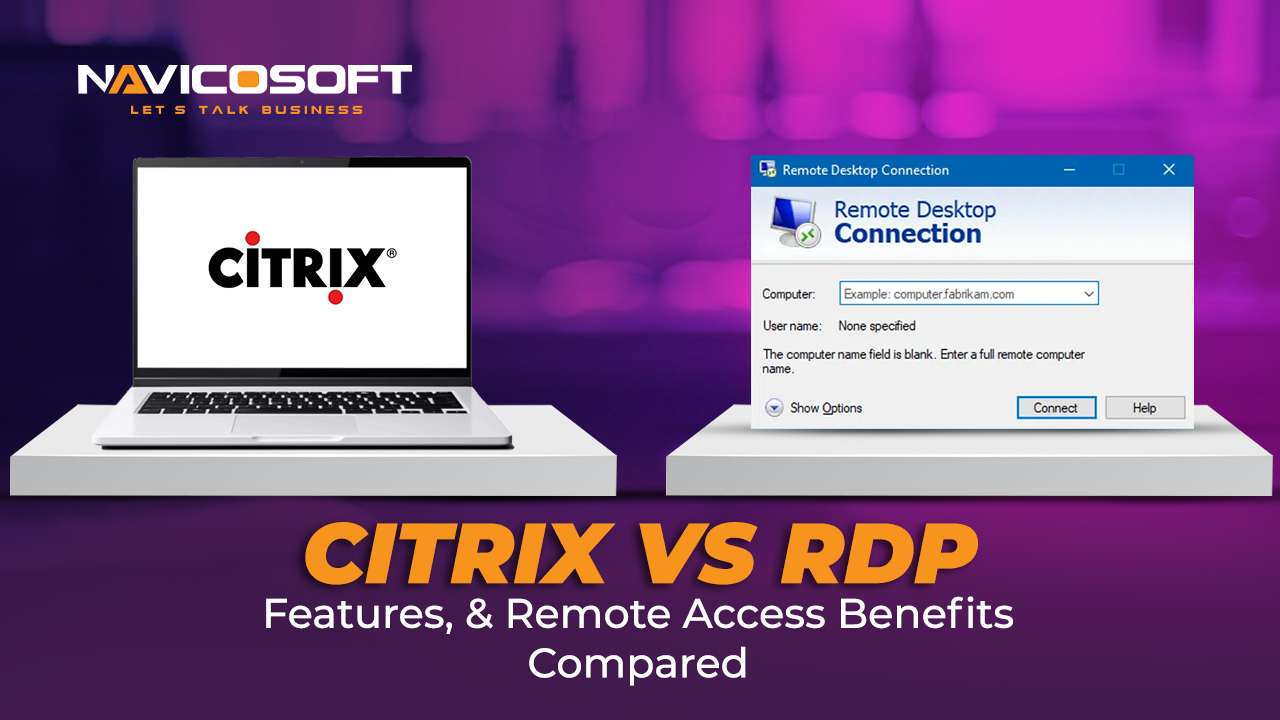
Citrix vs RDP: Features, & Remote Access Benefits
With an increasing trend of hybrid work models and virtual teams, remote access technologies have become an important component of advanced business infrastructure. Among the most highly preferred remote access solutions, Citrix and Remote Desktop Protocol offer distinct techniques for facilitating remote connections. Both technologies provide secure remote access and desktop virtualization but meet different business and IT infrastructure requirements.
What is Remote Desktop Protocol (RDP)?
Microsoft has developed a private remote access protocol known as RDP that is used to connect and control a remote computer or server over a network. It provides secure desktop access, remote management, troubleshooting, and central management from multiple locations.
Why do businesses compare Citrix vs RDP?
RDP server is available along with Windows, so small teams and technical staff can deploy for easy access of servers from distant locations. It is a cost-effective solution and very simple to set up, but it can give sluggish performance on weak network connections.
Citrix is slightly expensive, but it yields efficient remote working experience. It gives better performance on slow Wi-Fi and delivers stable security with perfect control for big companies with multiple users.
How does RDP work?
RDP works by sending GUI data, keyboard inputs, and clicking actions between a remote device and host computer over a network. The remote system activates tasks locally while users communicate with its desktop environment safely from another location.
Key Features of RDP:
- Remote desktop access from multiple locations and devices.
- Control server and system management functionalities.
- Safe encoded communication between client and host systems.
- Multi-user session facilitates enterprise environments.
- RDP provides resource sharing like files, printers, and clipboard access.
What is a citrix workspace environment?
This environment is a centralized digital workspace that delivers secure access to different apps, desktops, files, and business resources from any device. It helps remote workers to work effectively. Thus companies can maintain centralized administration, virtualization, and corporate-level security controls.
How does Citrix work?
Citrix operates by hosting apps and virtual desktops on control servers or cloud infrastructure, then safely provides screen updates and user inputs to remote devices. It increases efficiency of bandwidth usage and improves performance. Therefore, it gives safe access to company resources virtually from any location.
Key Features of Citrix Solutions:
- Virtual desktop and app delivery via systemized infrastructure.
- Hi-tech security controls with multi-layer authentication assistance.
- High-performance remote access upgrades for low-bandwidth networks.
- Multi-device access for desktops, mobile devices, and minimal clients.
- Central administration and scalability for enterprise IT environments.
Citrix vs RDP: Core Differences
Operating protocols and technology:
Citrix leverages updated display protocols like ICA and HDX to maximize remote functionality, multimedia delivery, and bandwidth proficiency. Remote Desktop Protocol depends on Microsoft’s integrated RDP protocol for uninterrupted remote desktop communication between client and host systems.Remote session delivery:
Citrix delivers controlled virtual desktops and applications. This technology deploys a managed virtualization environment which is made specifically for corporate scalability. RDP delivers immediate remote access to dedicated machines. Thus, it becomes suitable for smaller-scale remote management and user access needs.Application virtualization functionalities:
Citrix provides complete application virtualization. So, users can operate individual apps without accessing an entire desktop environment.
RDP is designed to focus on remote desktop connectivity. Also it provides partial virtualization capabilities than Citrix’s application delivery infrastructure.
Multi-User environment support:
Citrix is made to effectively manage high-capacity multi-user environments with controlled resource allocation and workload balancing. RDP delivers various sessions with the help of Windows Server configurations. However, they need additional setup and infrastructure enhancement for enterprise-scale implementation.Cross-Platform accessibility:
Citrix gives wider cross-platform compatibility across Windows, macOS, Linux, Android, iOS, and web-based environments. RDP is also compatible with different operating systems. Although, RDP relies highly on Windows-based infrastructure and Microsoft platform integration.Citrix vs RDP:
| Features | Citrix | RDP |
|---|---|---|
| Performance and speed | Outstanding performance even on low bandwidth | Gives best performance on stable network connections |
| Graphics and multimedia optimization | Upgraded optimization for high-quality graphics and multimedia | Restricted optimization for graphics and media |
| Bandwidth efficiency | Highly efficient, leverages powerful compression techniques | Medium bandwidth usage efficiency |
| Session reliability | Highly reliable sessions with reconnection assistance | Basic session stability |
| File and printer redirection | Modern, flexible redirection options | Standard file and printer redirection assistance |
Advantages of leveraging Citrix:
Improved user experience:
Citrix gives a feasible interface with improved performance across devices.
Better performance in remote environments:
Citrix gives best performance for effective management of latency and bandwidth limitations.Modern virtualization features:
Cirtrix supports entire desktop and high-capacity application virtualization.Advantages of deploying Remote Desktop Protocol:
Lower preliminary cost:
RDP provides budget-friendly costs for remote access solutions for organizations.Simple Deployment:
Users get a simple setup with least configuration needs.Native Windows integration:
Remote Desktop Protocol gives integrated compatibility with Windows-based systems and infrastructure.Citrix vs RDP: Which One Should You Choose?
Selection between Citrix and Remote Desktop Protocol relies on your company’s scale, security needs, and performance expectations.
When to Choose Citrix?
Opt for Citrix when your business needs:
- High-performance remote access for high-capacity or remote teams.
- Hi-grade security, compliance, and centralized control.
- Application and desktop virtualization at corporate level.
- Outstanding performance over low-bandwidth or unstable networks.
- Operates across multiple devices and platforms.
When to Choose RDP
You can select RDP when your business needs:
- Easy remote access for small to medium environments
- Budget-friendly solution with minimal setup
- Standard IT administration and troubleshooting tasks
- Integrated Windows-based infrastructure deployment
- Immediate and user-friendly remote desktop connections
Best Practices for Secure Remote Access
- Use Multi-Factor Authentication
- Keep Systems Updated
- Restrict Public Exposure
- Implement Secure Gateways
- Monitor Remote Sessions
Final Thoughts on Citrix vs RDP:
Citrix delivers hi-tech virtualization, scalability, and improved performance for corporate environments. On the contrary to this, Remote Desktop Protocol gives a simpler, budget-friendly remote access solution. The selection depends on company requirements, budget limitations, security demands, and remote management infrastructure.